
To Kill a Child and the Loss of the Sacred
Only once we see the divine in all things can we understand true justice and true peace. Only when we can see the infinite in the face of the Other – or at least in the face of a child – can we truly know what to do or how to be to stop this senseless killing.

Spinoza: on the necessity of faith and a new religion
Rather than thinking of religion as something which imposes itself upon man from the outside, Spinoza offers us a new way of seeing faith as that which inspires good behavior from within ourselves, and that it is the endless contemplation of the most expansive of thoughts – that is, to think adequately what one might intuitively think is the most unthinkable thought – is to place God’s necessity above all human passions, vindicating this sort of faith as that which is necessary to the Enlightenment’s strife to save man from his bondage.
Doubt, Recognition, and the Question of Justice
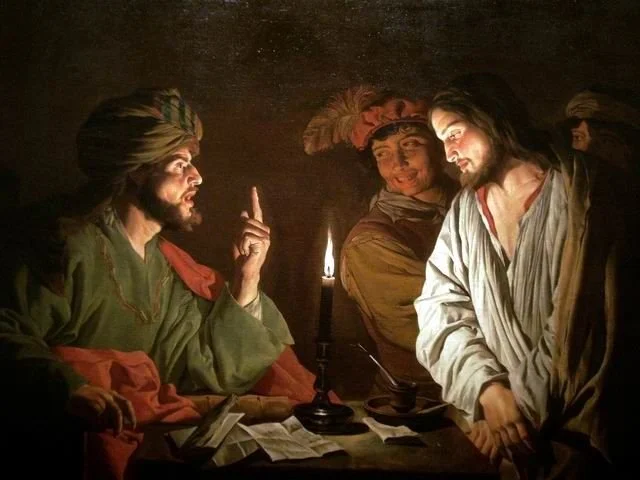
Yet, there is redemption for Peter, but not without its cost. When Peter sees the resurrected Christ, there is no more room for doubt. His own eyes have witnessed the most inscrutable evidence of Jesus’ divinity: the overcoming of death. Yet, experience tells Peter that death is still real, and that there will be moments of failure in the pursuit of truth and the pursuit of justice. The difference here is that Peter now knows that there is hope beyond death. For us, the lesson here is that there is hope beyond death, and more concretely that there is redemption beyond failure.

Influence.
A form of genius in its own right, the sort of data-mining that was happening at Google was beginning to find ways to connect people to other people who shared similar sorts of ideas, values, hobbies, and interests. There is much literature on the topic of how this phenomenon has led to polarization in all sectors of the social world, but what is more interesting to me is how the “algorithm” began to form a sort of subjectivity that was quite different from the idea of the “subject” that we in the liberal West had come to understand ourselves to be part of.