
Eros, and the search for what is perfect: Plato on the philosophical value of erotic experience
To care for the other and to desire the other proves to be a way to be directed towards knowledge of the Good, but again, as we see in Aristophanes, the attainment of that Good always falls short, and we always again find ourselves searching for more. Aristophanes tells us of how this love is overwhelming and how it fills the lovers with “affection [and] concern.”

Gluttony: on resource, exploitation, and the excesses of freedom
Today, we know that food precarity is on the rise across the globe. Arguments point to all sorts of “-isms” which are at fault for what can be described as disruptions of our food chains making the demand for nourishment grow while supply tether on the brink of austerity. Whether it is capitalism, socialism, globalism, industrialism, or what have you, and whether the inflated demand is orchestrated or austerity the product of artificial scarcity, the need for food is real and the precarity many families are facing on account of the inflated cost of food and the very real and unavoidable demands of hunger highlight not only man’s dependence on the things of this world, but how certain responses to this need can become so ingrained in our culture, that the -isms which allocate our resources become habit to us, and these forms of consumption and labor which produce such scarcity are no more than the mechanisms of a maladapted need which center on the logic of egoism.

Being from the World: Levinas on the priority of freedom, and the cost of ethics
While Levinas would be enthused about a philosophy which decidedly positions others as necessary for the wellbeing and life of the self, he would also caution that unlike air, water, or the fruits of the Earth, other people have within themselves lives of their own, needs of their own, desires, wants, hopes and dreams of their own and who are, like us, worthy of protection and the insurance of the same freedom afforded to ourselves by our very nature. It is this unknowable interiority of the other which subjects us to a responsibility that asks us to skirt our freedom; to relinquish a tiny bit of our carefree abandon with the world to protect the needs of another.

To Kill a Child and the Loss of the Sacred
Only once we see the divine in all things can we understand true justice and true peace. Only when we can see the infinite in the face of the Other – or at least in the face of a child – can we truly know what to do or how to be to stop this senseless killing.

Spinoza: on the necessity of faith and a new religion
Rather than thinking of religion as something which imposes itself upon man from the outside, Spinoza offers us a new way of seeing faith as that which inspires good behavior from within ourselves, and that it is the endless contemplation of the most expansive of thoughts – that is, to think adequately what one might intuitively think is the most unthinkable thought – is to place God’s necessity above all human passions, vindicating this sort of faith as that which is necessary to the Enlightenment’s strife to save man from his bondage.
Doubt, Recognition, and the Question of Justice
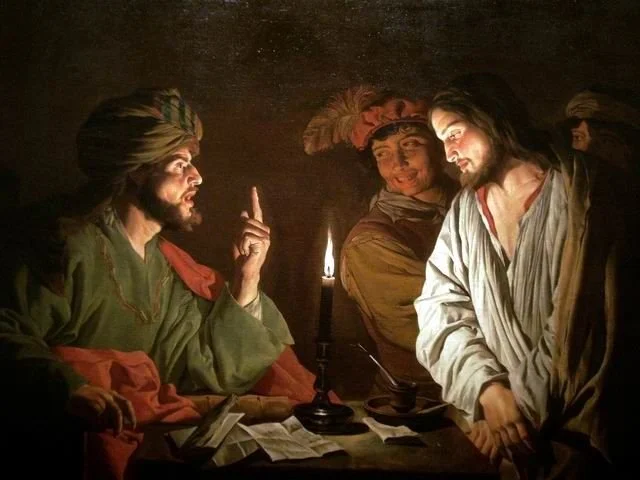
Yet, there is redemption for Peter, but not without its cost. When Peter sees the resurrected Christ, there is no more room for doubt. His own eyes have witnessed the most inscrutable evidence of Jesus’ divinity: the overcoming of death. Yet, experience tells Peter that death is still real, and that there will be moments of failure in the pursuit of truth and the pursuit of justice. The difference here is that Peter now knows that there is hope beyond death. For us, the lesson here is that there is hope beyond death, and more concretely that there is redemption beyond failure.

Influence.
A form of genius in its own right, the sort of data-mining that was happening at Google was beginning to find ways to connect people to other people who shared similar sorts of ideas, values, hobbies, and interests. There is much literature on the topic of how this phenomenon has led to polarization in all sectors of the social world, but what is more interesting to me is how the “algorithm” began to form a sort of subjectivity that was quite different from the idea of the “subject” that we in the liberal West had come to understand ourselves to be part of.