The Gospel according to Chat GPT
The images below were created by Chat GPT using highly detailed descriptions of an image that would otherwise be rendered traditionally by an artist on oil on canvas.
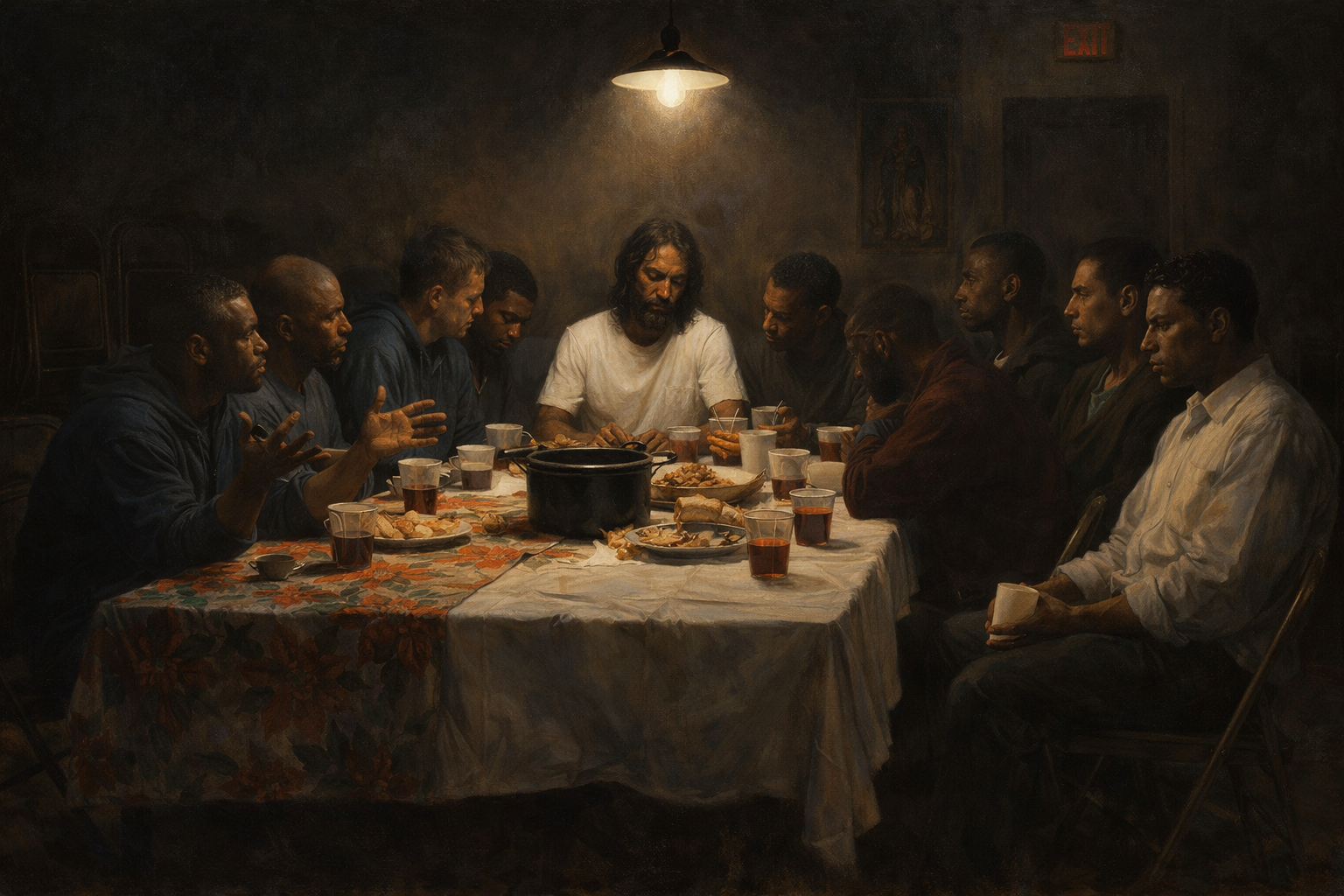
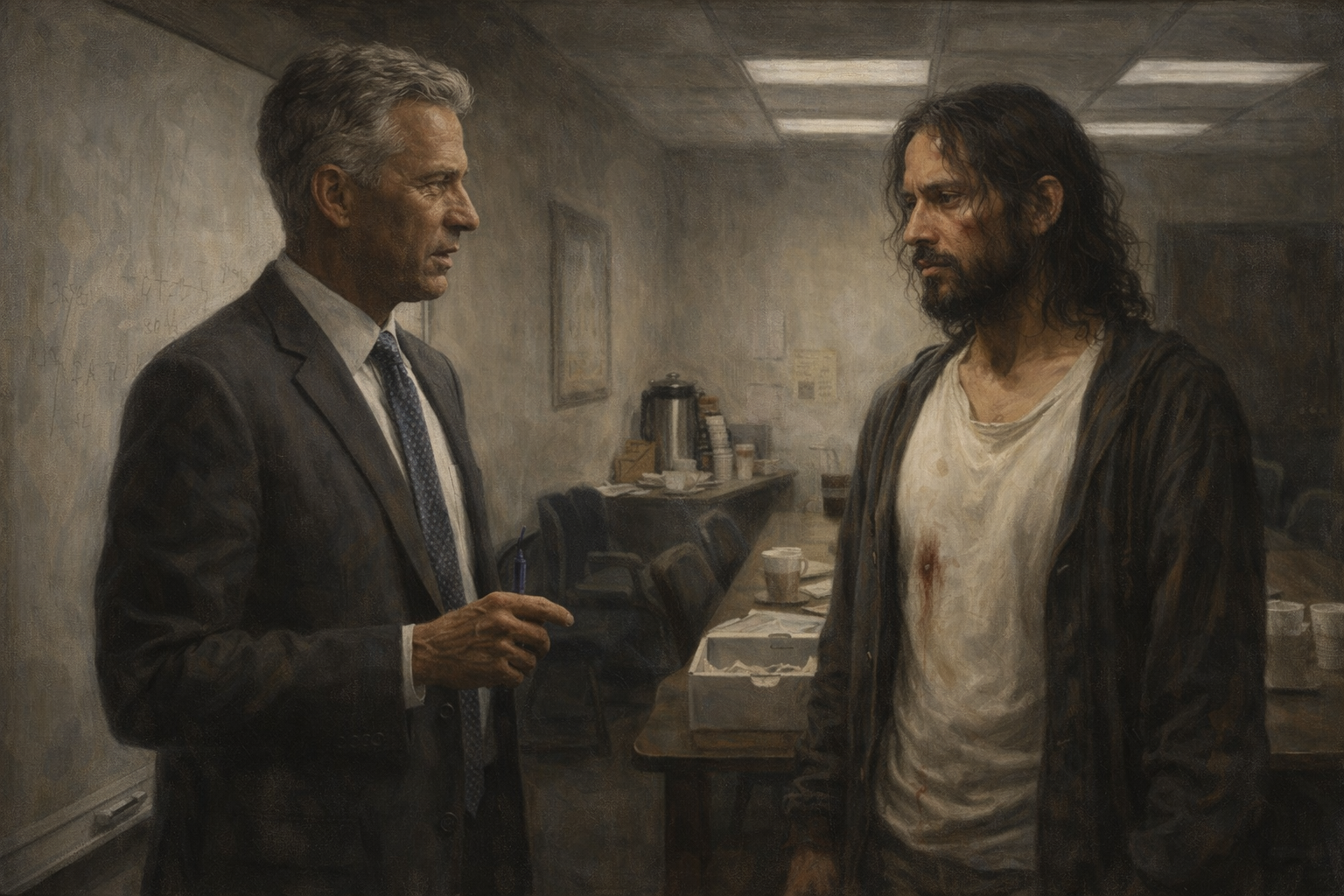
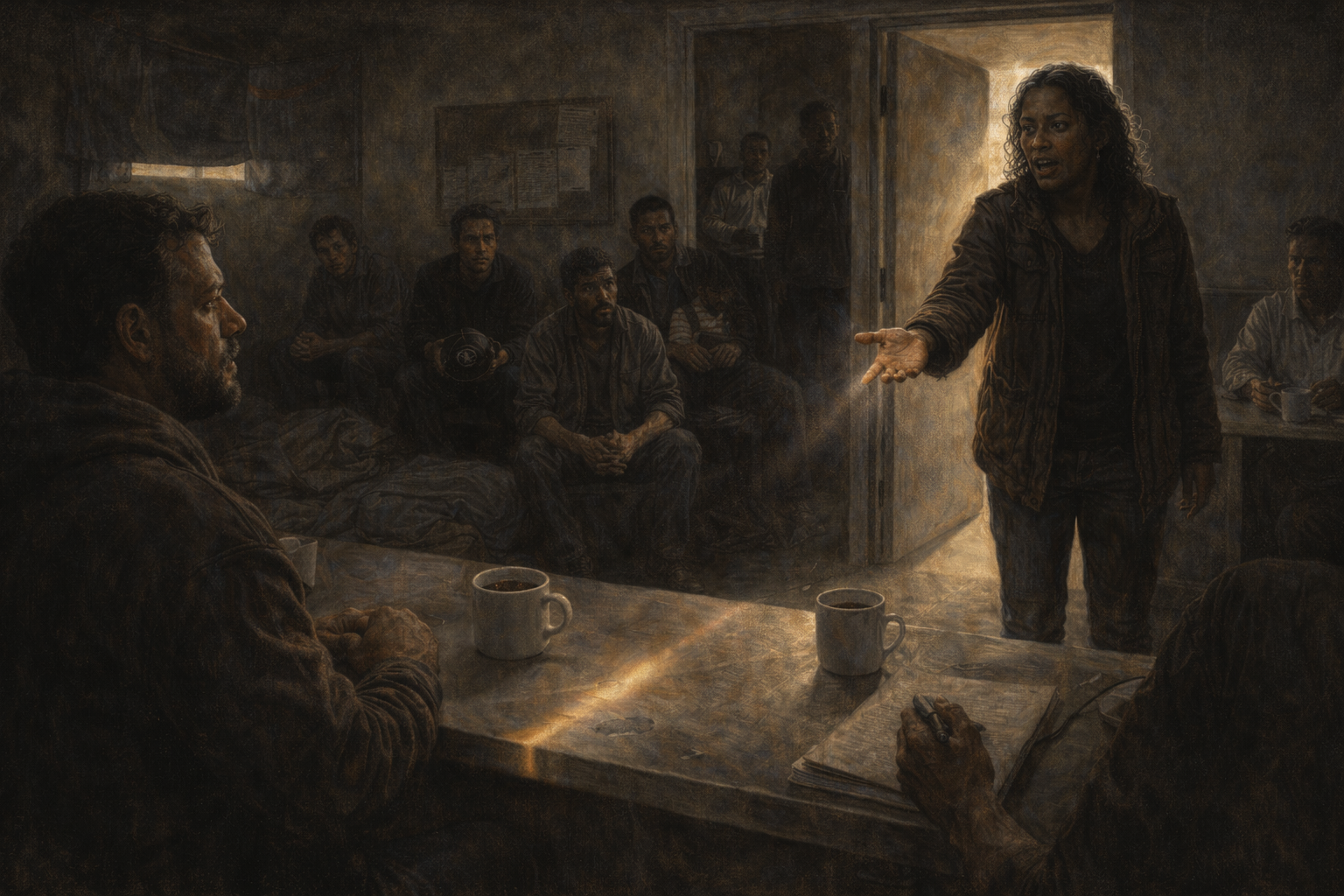
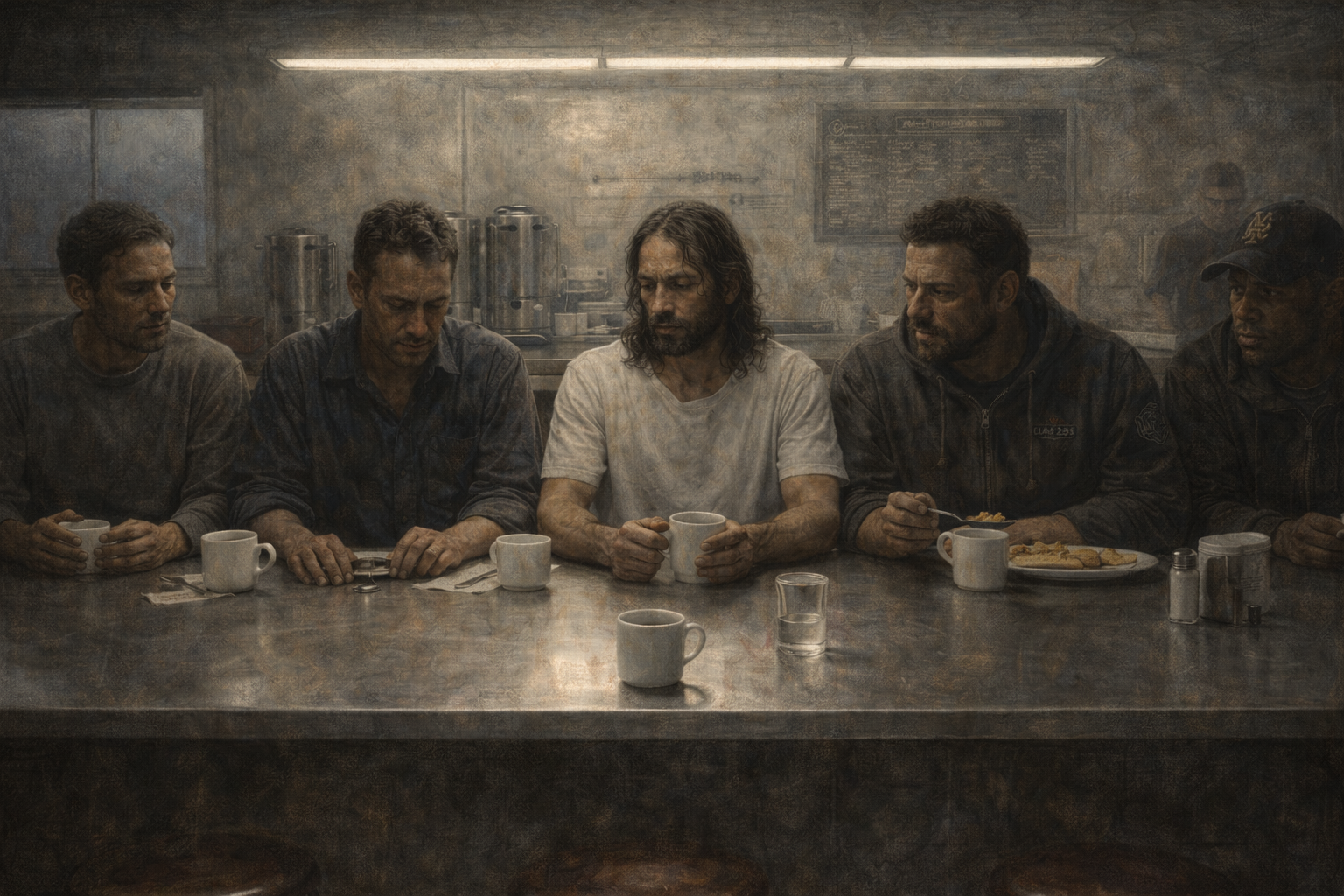
It is a series of large-scale oil paintings — monumental in the tradition of history painting, eight feet by twelve feet each — reimagining specific scenes from the Gospel of John as contemporary American tableaux. The series has a consistent cast, a consistent visual language, and a consistent theological seriousness that refuses to become didacticism.
The scenes, in order: the Last Supper. The resurrection appearance to Mary Magdalene. Jesus before Pilate. The crucifixion. The breakfast on the shore.
The central interpretive move is one of radical translation — not updating for relevance, not making the gospel accessible or palatable, but asking what these events would actually look like if they happened here, now, in the specific textures of contemporary American life. A federal courthouse with mustard-colored carpet and a broken candy machine. A state execution chamber with a facilities budget and a weight-to-drop ratio chart. A walk-up apartment with a blanket over the window. A diner at five-thirty in the morning.
The translation is rigorous. It does not reach for the dramatic or the cinematic. It reaches for the administrative, the institutional, the ordinary — because that is where power actually operates, and that is where the gospel actually lands, which is the same insight Caravaggio had in 1600 when he put the apostles in peasant clothes with dirty feet and the Church was scandalized and he was right.
The visual language is consistent across all five paintings. The scale makes a theological argument — that these events are of history-painting weight, that they deserve the wall space we give to battles and coronations and the founding of republics. The single light source in each painting is different — candlelight, early morning, flat afternoon sun, fluorescent — but always falls on faces with the same democratic indifference, the same mercilessness, finding the scar and the open hand and the face that has been crying and the face that is about to. The darkness the figures emerge from is the same darkness in every canvas. The backgrounds are barely resolved. The foregrounds are rendered with obsessive precision.
Jesus is the same man in every painting. Brown-skinned, from the borderlands, the white Hanes t-shirt soft from washing. He is off-center in the first painting and the diner painting because the off-center is a promise — and centered in the crucifixion because that is what the off-center was building toward. His hands are open in the Last Supper and open in the execution chamber and the painter has made sure you notice.
John is twenty-two in every painting. The painter has tracked something across his face from canvas to canvas — the expression that has no common name, the expression he will spend seventy more years trying to find language for — and it is the same expression and different every time, because it has passed through things, because each painting is another thing it has passed through.
The series has a shape. It moves from the table to the courthouse to the overpass — or the chamber, and the glass — to the apartment on Sunday morning to the diner. It moves from communion to judgment to death to resurrection to recognition. It moves from the large group to the three at the glass to the woman in the doorway to the six men at the counter. It moves, formally, from candlelight to fluorescent, from warm to cold to warm again, and the warmth at the end is not the warmth of resolution but the warmth of a diner at five-thirty in the morning, which is the warmth of here is food, here is coffee, eat something, which is the only warmth the gospel has ever actually offered, which is enough, which has always been enough.
The unnamed painter, whose name is on the back of one of the canvases in handwriting that suggests someone who learned to write in another language first, has made a body of work that is in some storage facility or church basement or private collection that cannot sleep with it on the wall.
The work is not comfortable. It was not made to be comfortable. It was made to put you on the wrong side of the glass and ask what you are going to do about it. It was made to put you in the viewing room and put the camera's red light in the upper corner of your vision and let you sit with that.
It was made, finally, in the tradition of all the art that has ever taken this material seriously — which is the tradition that understands that the gospel is not a set of propositions to be illustrated but a set of events to be witnessed, and that witnessing costs something, and that the cost is the whole point, and that the painter's job, like the gospel's job, like John's job at twenty-two on the wrong side of the glass, is simply to stay in the room and not look away.